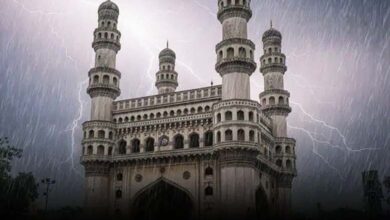

India May Face Drought and Extreme Heat as Super El Nino Likely to Persist from May to Winter

Hyderabad | May 16, 2026 | DeccanLive.com
India may face severe heat and drought conditions this year as weather experts warn about the possible arrival of a “Super El Nino” during the coming monsoon season.
According to the US-based National Oceanic and Atmospheric Administration (NOAA), Super El Nino conditions could begin between May and July and continue until the winter season.
The agency said that the temperature of the Pacific Ocean in May is already 0.5°C higher than normal. These warmer conditions are expected to remain throughout the monsoon season. Last month, the chances of El Nino developing were estimated at 61%, but now the possibility has increased to 82%.
Mrutyunjay Mohapatra, chief of the India Meteorological Department (IMD), said the changing weather pattern could directly affect monsoon rainfall in India and increase the risk of drought in several regions.
El Nino is a weather phenomenon that causes unusual warming of ocean waters in the Pacific Ocean. This affects global wind and rainfall patterns, leading to droughts in some regions and heavy rains or floods in others.
Experts explain that when El Nino becomes active, it weakens the monsoon winds that normally bring rain to India from the Pacific region. As a result, rainfall may reduce significantly.
According to NOAA’s latest forecast, there is an 82% chance of Super El Nino developing between May and July this year. There is also a 96% possibility that it could continue through the winter season from December 2026 to February 2027. Experts say there is around a 67% chance that the event could become “strong” or “very strong.”
This situation could lead to weaker monsoon rains, severe heatwaves, and drought-like conditions in many parts of India and South-East Asia.
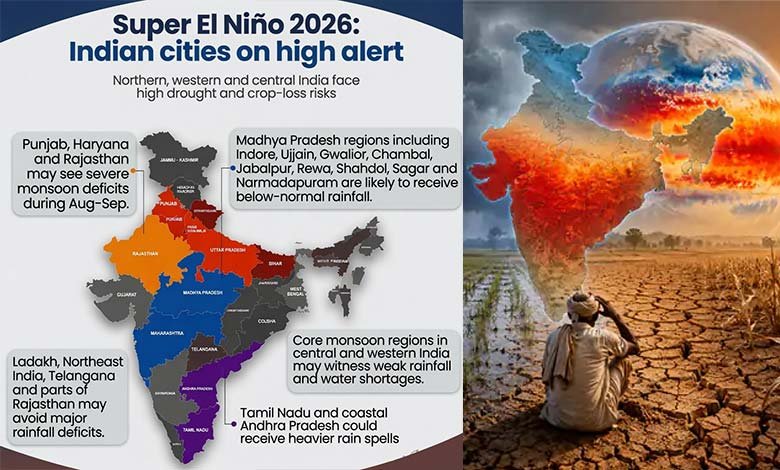
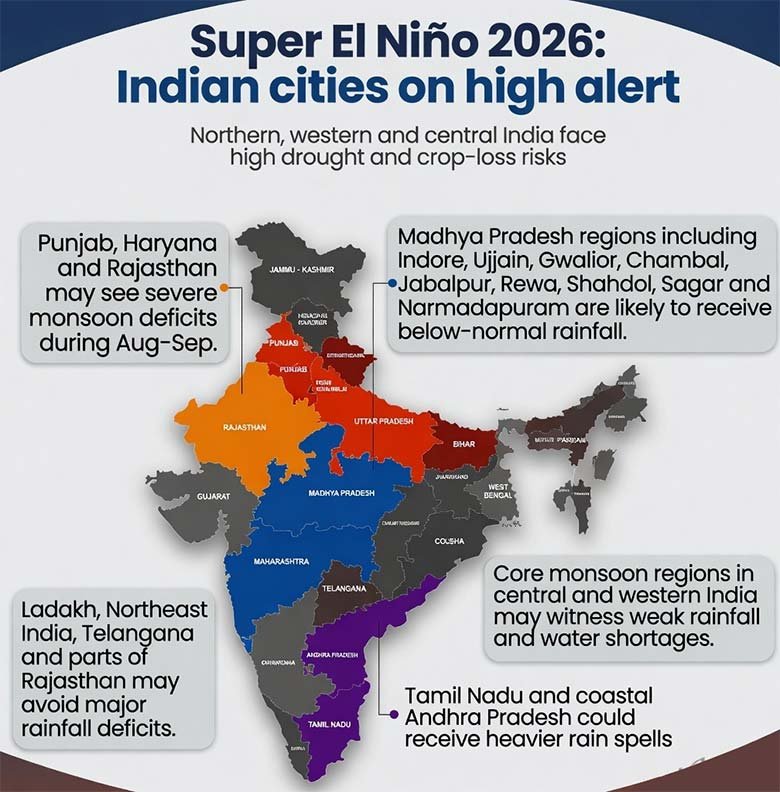
States such as Punjab, Haryana, and Rajasthan are expected to be among the most affected during August and September. Northern, western, and central India may face long dry spells and possible agricultural losses.
In Madhya Pradesh, regions including Indore, Ujjain, Gwalior, Chambal, Jabalpur, Rewa, Shahdol, Sagar, and Narmadapuram may receive below-normal rainfall.
However, some areas such as parts of Rajasthan, Telangana, Ladakh, and parts of northern India may experience less impact.
Experts also pointed to a recent study published in the journal Nature, which said that although overall rainfall around the world is increasing, the planet is becoming drier. The study explained that rain is now falling in short, intense storms instead of being spread evenly throughout the year, causing water to evaporate quickly and reducing moisture in the soil.
Authorities and weather experts have advised people, especially farmers, to stay prepared for possible changes in weather and water availability in the coming months.