
US-Iran Talks in Islamabad Failed: What Happened Behind the Scenes?

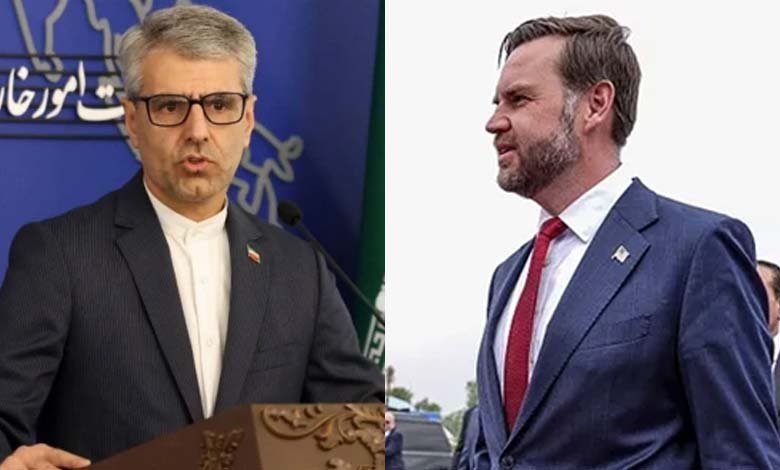
Islamabad | April 12, 2026 | DeccanLive.com
“This is our final and best offer. Now we will see whether Iran accepts it or not. Thank you.”
With these words, US Vice President J.D. Vance tapped the table twice and ended the press conference.
The talks between the United States and Iran, which lasted for 21 hours in Islamabad, Pakistan’s capital, ended without any agreement.
This was announced by the US Vice President early Sunday morning, after 6 AM. He said Pakistan made strong efforts to bring the two countries closer and help reach a deal, but “the bad news is that we could not reach any agreement.”
He added that this situation is worse for Iran than for the US, saying, “No deal was made, and we are returning to America.”
At Pakistan’s request, both countries had agreed to a two-week temporary ceasefire and sent their teams to Islamabad for talks. The discussions were held at the Serena Hotel.
Although the US announced that talks failed, it was not clear what will happen to the temporary ceasefire.
About two hours later, Pakistan’s Foreign Minister also spoke and said Pakistan will continue to act as a mediator and stressed that both sides should remain committed to the ceasefire.
Why Did the Talks Fail?
The US Vice President said they clearly told Iran their conditions – what they could accept and what they could not.
According to him, Iran decided not to accept those conditions.
When journalists asked what exactly Iran rejected, he said he could not share full details of the closed-door talks, but explained simply:
The US wanted assurance that Iran would not build nuclear weapons and would not obtain the tools needed to develop them.
He said this is the main goal of the US President, and they tried to achieve it through negotiations.
He also said Iran’s ability to enrich uranium has already been damaged, but the US did not see a clear commitment from Iran that it would never build nuclear weapons.
Other Key Points from the Talks
- Discussions were also held about Iran’s frozen assets, but no agreement was reached
- The US said it showed flexibility and joined talks in good faith, but no progress was made
- The Vice President stayed in contact with President Trump and the national security team throughout the 21 hours
At the end, he repeated that the US has given its final offer and is waiting to see if Iran accepts it.
After the press conference, he left from Noor Khan Airbase for the United States. Pakistani officials, including top military and government leaders, saw him off.
Iranian Media’s View
According to Iranian media, the talks failed because the US did not show flexibility.
The Iranian delegation arrived in Islamabad late Friday night, while the US delegation arrived Saturday morning.
Both sides met separately with Pakistani leaders before direct talks began.
Pakistani officials said that initially, messages were exchanged through Pakistan, followed by about 2.5 hours of direct talks. After a break, technical discussions continued between experts late into the night.
Iranian reports claim that Iran presented proposals multiple times and tried to make the US more realistic.
However, they say that “excessive demands” from the US prevented any agreement, and due to lack of flexibility, talks ended without result.
So far, no details have been announced about the next round of talks.
What Journalists Experienced Near Serena Hotel During US-Iran Talks in Islamabad
Biryani, karahi, fried rice, along with chicken shashlik, kebabs, and even dessert – this was not the menu of the Serena Hotel in Islamabad, where US and Iranian delegations were holding direct talks on Saturday.
Instead, this scene was from the Jinnah Convention Center, located about one kilometer away, where special arrangements were made for journalists from around the world.
At any other time, such arrangements would have been praised by the Pakistani government. But this time, journalists – both local and international – were there in search of “exclusive” news. They had come to cover the US-Iran talks being mediated by Pakistan.
Outside the hotel, buses were parked to take journalists to the Convention Center. Due to security reasons, private vehicles and unrelated افراد were not allowed.
Inside the buses, foreign journalists were full of excitement.
One international reporter was even heard saying on the phone, “All eyes are on Pakistan.”
Lots of Food, But Very Little Information
After some time, we reached the Jinnah Convention Center, where dozens of journalists from different countries had gathered.
It felt like a global gathering – people speaking English, Urdu, Pashto, and many European languages, all busy reporting through cameras and phones.
I wondered how reporting would work from here.
I asked a foreign journalist, “Do you know what is happening at the Serena Hotel, just one kilometer away?”
She replied, “Maybe some journalists outside might know something, but here, no one knows anything.”
I heard similar responses from many other reporters.
Even after spending the whole day there, I did not see any government official who could brief journalists about what was going on.
Local and foreign journalists kept asking each other the same question: “Does anyone know what’s happening in the talks?”
Slow Internet, Growing Frustration
The lack of information and slow internet at the Convention Center frustrated journalists throughout the day.
Meanwhile, direct talks between the US and Iran were ongoing at the Serena Hotel under Pakistan’s mediation.
While trying to gather updates, my connection with sources was interrupted multiple times due to slow internet.
Journalists who had traveled from all over the world clearly hoped they wouldn’t return home empty-handed.
After all, there is no bigger news than a major conflict coming to an end.
So, everyone kept their eyes fixed on the Serena Hotel, waiting for any update.
The Long Wait Ends
The news journalists had been waiting for finally came after 6 AM on Sunday.
US Vice President J.D. Vance announced that the talks had ended without any agreement.