
Israel vs Iran: Who Is Militarily Stronger as Tensions Escalate in the Middle East?

Middle East | February 28, 2026 | By: Syed Habeeb Imam Quadri
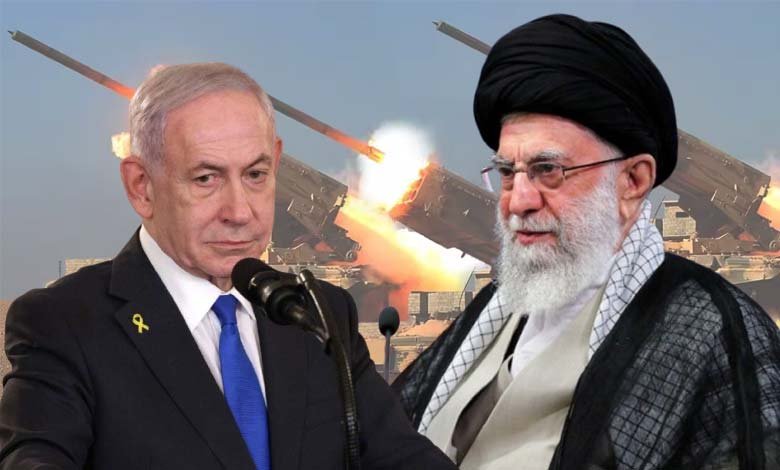
Rising tensions between Israel and Iran have once again sparked debate over which country is militarily stronger.
On February 28, Israel launched what its Defense Minister described as “pre-emptive strikes” against Iran. The attacks came at a time when diplomatic talks between the United States and Iran were ongoing over Tehran’s nuclear program.
US President Donald Trump had earlier warned Iran to agree to a deal limiting its nuclear activities. Although negotiations were underway, Trump expressed dissatisfaction with the pace of talks and ordered a large military buildup in the Middle East. Iran has repeatedly warned that it would respond strongly to any attack.
This is not the first direct confrontation. In June last year, Israeli strikes on Iran led to a 12-day conflict. The United States later joined Israel in targeting Iranian nuclear facilities.
With tensions rising again, many are asking: Who is stronger militarily — Israel or Iran?
Missile Power
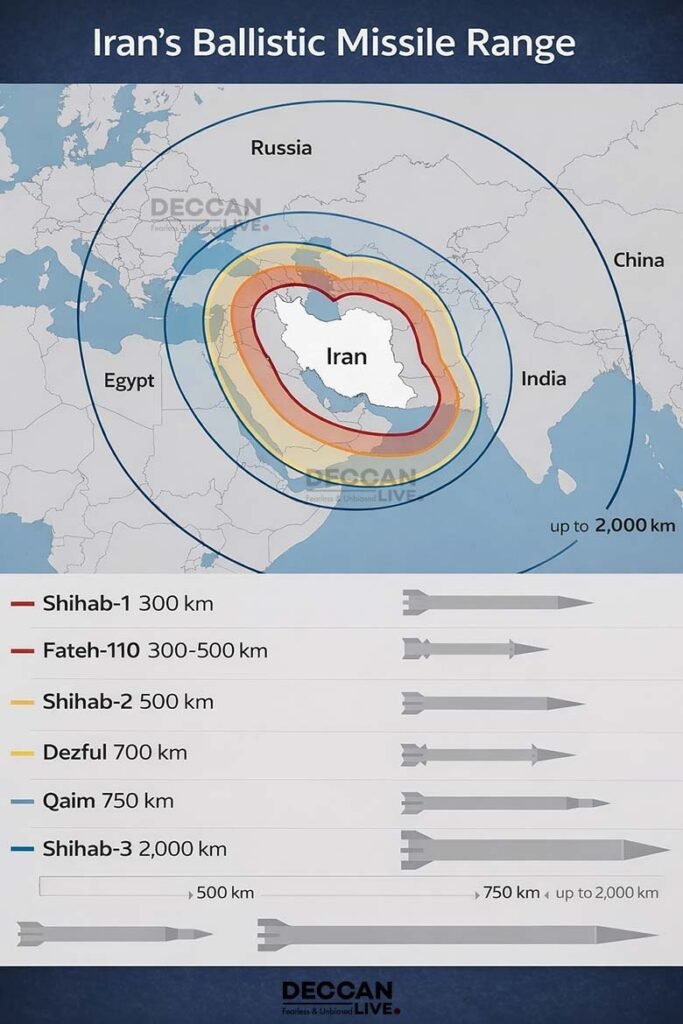
Iran has one of the largest and most diverse missile programs in the Middle East. US military officials have previously estimated that Iran possesses more than 3,000 ballistic missiles. In October 2024, Iran launched missiles toward Israel, demonstrating its long-range strike capability.
Some of Iran’s key missiles include:
- Shahab-1 (range: 300 km)
- Shahab-2 (range: 500 km)
- Shahab-3 (range: up to 2,000 km)
- Zolfaghar (700 km)
- Qiam-1 (750 km)
- Fateh-110 (300–500 km range)
Iran has also invested heavily in drone technology and has reportedly supplied drones and missiles to allied groups in the region.
Israel, on the other hand, does not publicly disclose the size of its missile stockpile. However, it is widely known to possess advanced missile systems developed both domestically and in partnership with allies like the United States. Israeli missiles include Jericho-1, Jericho-2, Jericho-3, Delilah, Gabriel, and LORA systems.
A key advantage for Israel is its Iron Dome air defense system, which is designed to intercept short-range rockets and drones. The system has been widely used against rocket fire from Gaza and Lebanon.
Defense Budget and Military Personnel
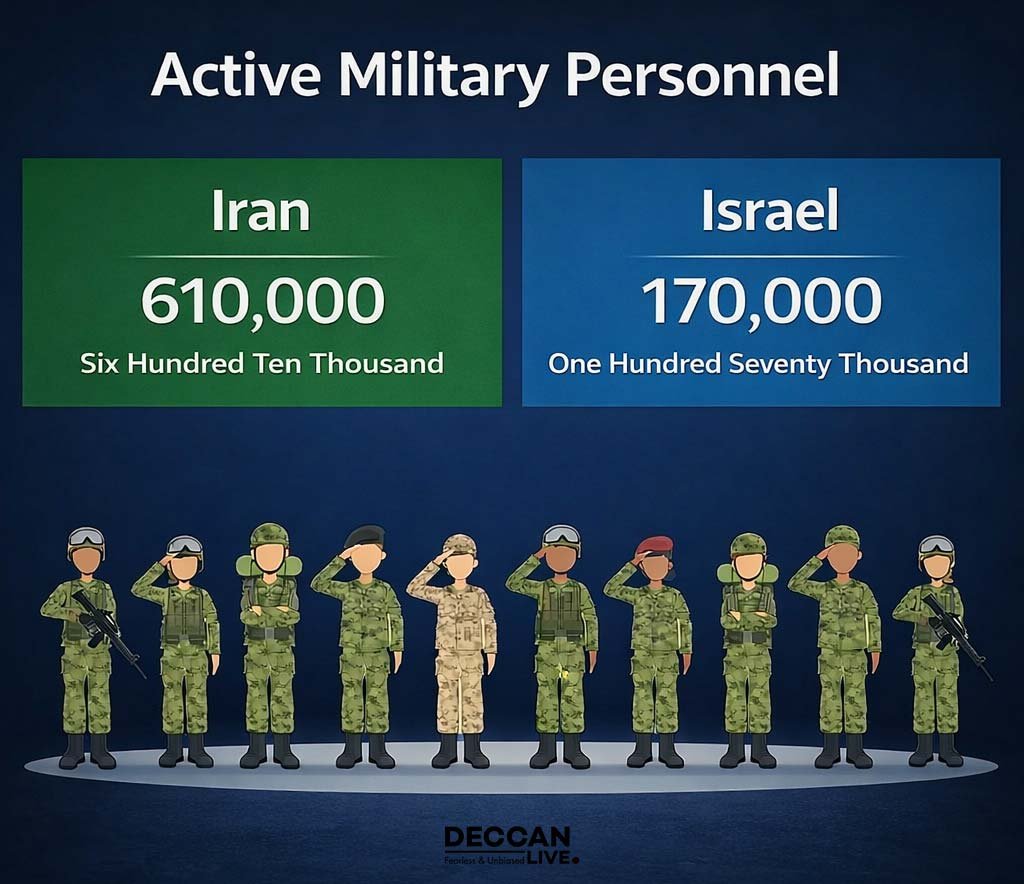
Iran is geographically much larger than Israel and has nearly ten times the population. It also has significantly more active military personnel — around 610,000 compared to Israel’s approximately 170,000.
However, military strength is not only about numbers.
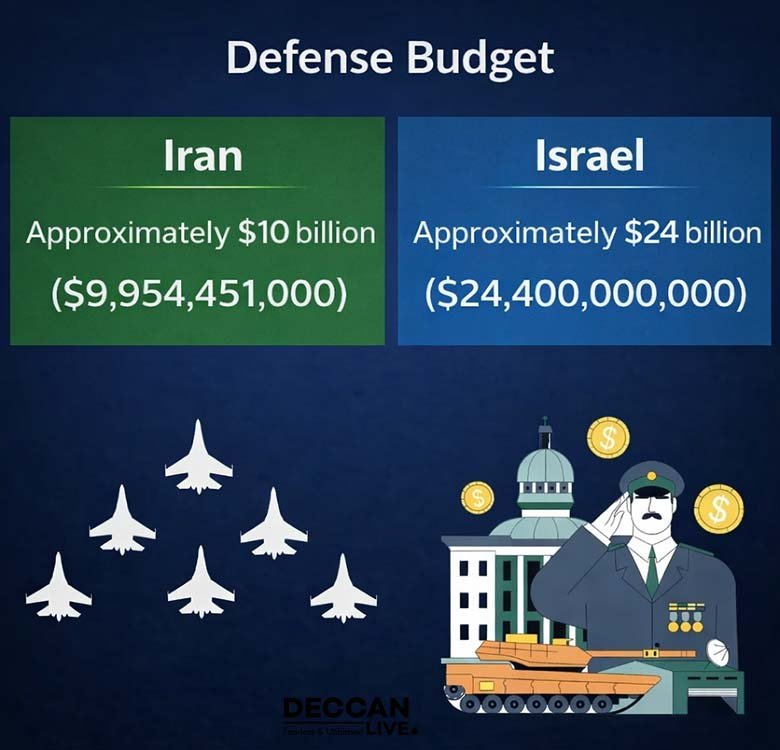
Israel spends more than $24 billion annually on defense, compared to Iran’s estimated $10 billion defense budget. Israel’s higher spending allows it to invest heavily in advanced weapons systems and technology.
Air and Naval Power
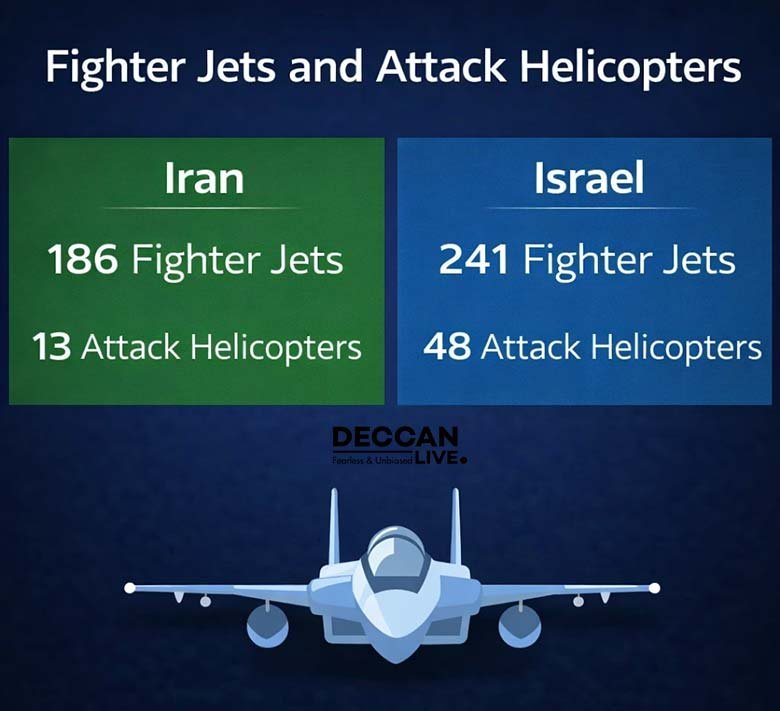
Israel holds a clear advantage in air power. It operates around 241 fighter jets and 48 attack helicopters equipped with advanced technology.
Iran reportedly has about 186 combat aircraft and only 13 attack helicopters, many of which are older models.
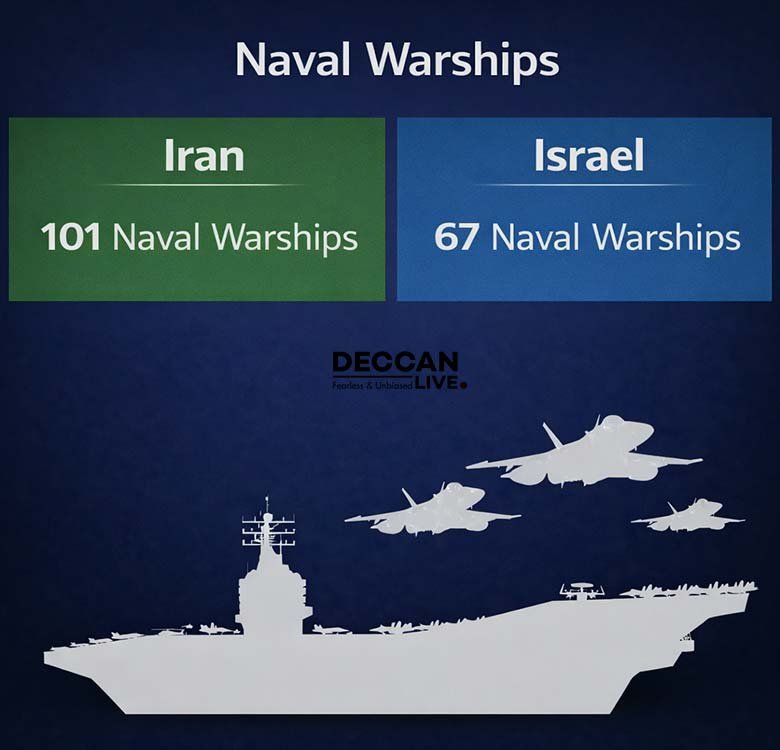
In terms of naval strength, Iran has a larger number of vessels — around 101 ships compared to Israel’s 67. However, Israel’s navy is considered technologically more advanced.
Other Factors
Israel has significant experience in conducting targeted and covert operations beyond its borders. In the past, high-profile Iranian military and civilian figures have been killed in operations widely attributed to Israel, though official acknowledgment has often been limited.
Cyber warfare is another potential battlefield. Experts believe cyber attacks could play a major role in any future conflict, with both nations having offensive cyber capabilities.
The Bigger Picture
While Iran has larger manpower and an extensive missile program, Israel’s advantages lie in advanced technology, air superiority, missile defense systems, and higher defense spending.
Most analysts believe that any direct large-scale ground war between the two countries is unlikely due to geographical distance and regional risks. Instead, future confrontations would likely involve missiles, drones, airstrikes, and cyber operations.
As tensions continue to rise, the balance of power between Israel and Iran remains one of the most closely watched issues in global security.