
Iran Fires 30 Missiles at Israel After US-Israeli Airstrikes, Launches ‘Fatah Khyber’ Operation

Tehran/Tel Aviv | February 28, 2026 | DeccanLive.com
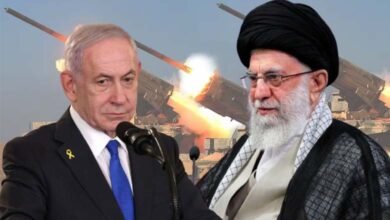
The Middle East witnessed a dramatic escalation on Saturday after Iran launched a major missile operation named “Operation Fatah Khyber” in response to reported joint airstrikes by the United States and Israel on Iranian targets.
According to the Israeli military, Iran fired around 30 ballistic missiles towards Israel, mainly targeting northern regions. Explosions were heard in several areas, and air raid sirens sounded across parts of the country.
Iran’s Islamic Revolutionary Guard Corps (IRGC) confirmed that it had launched missiles and drones at Israel in response to what it described as aggression by the US and Israel. In a statement, the IRGC said the first wave of large-scale missile and drone attacks had begun against Israeli-controlled territories.
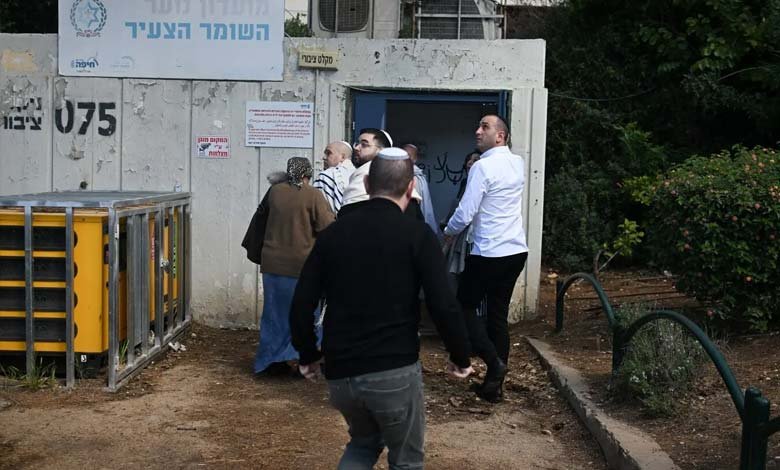
Following the missile launch, Israeli authorities instructed citizens to immediately move to shelters and follow Home Front Command guidelines. The Israeli military said its air defense systems were activated as soon as the missiles were detected. However, officials warned that no defense system is fully foolproof and urged the public to strictly follow safety instructions.
Background: US-Israeli Strikes on Iran
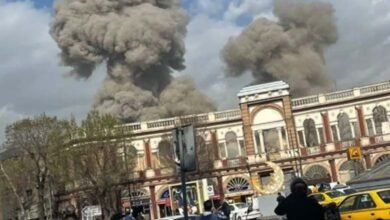
Earlier, Israel and the United States reportedly carried out what was described as a “pre-emptive strike” on Iranian targets. Loud explosions were heard in Tehran, and smoke was seen rising from different parts of the city.
Reports said missiles struck areas including University Road and Mehrabad Airport in Tehran. Iran’s Fars news agency stated that at least three locations in the capital were hit. Iranian local media also reported explosions in cities such as Kermanshah, Lorestan, Tabriz, Isfahan, and Karaj.
According to Al Jazeera, Israeli strikes targeted key Iranian institutions, including the Ministry of Intelligence, Ministry of Defense, Iran’s Atomic Energy Organization, and the Parchin military complex.
Reuters reported that the office of Iran’s Supreme Leader Ayatollah Ali Khamenei was among the targets, although he was reportedly not present in Tehran at the time and was moved to a secure location. Iranian President Masoud Pezeshkian was also reported safe.
Israeli Defense Minister Israel Katz confirmed that Israel had targeted Iran but did not provide further operational details. Israel’s Channel 12 claimed the operation was carried out jointly with the United States.
A senior Israeli defense official told Reuters that the operation had been planned months in coordination with Washington, and the timing had been finalized weeks earlier. A US official reportedly told Al Jazeera that the goal of the strikes was to weaken Iran’s intelligence and defense systems.
Regional Impact
After the exchange of strikes, Israel closed its airspace to civilian flights. Iraq also shut its airspace, while reports said US Embassy staff in Qatar were moved to shelters.
Iranian officials stated that the country did not start the war. Ibrahim Azizi, head of Iran’s parliamentary National Security Commission, said in a social media post that Iran had warned its adversaries and that the consequences were no longer in their control.
A travel advisory was issued for Pakistani nationals in Iran, advising them to avoid unnecessary movement. Several countries have also urged their citizens to leave Iran amid growing fears of a wider regional conflict.
Rising Global Concerns
The latest escalation comes shortly after US President Donald Trump demanded that Iran stop uranium enrichment, saying he was not satisfied with Tehran’s position in negotiations. His remarks had already raised fears of possible military action.
This marks the second US strike on Iran in less than a year. In June 2025, US forces targeted three Iranian nuclear facilities. In response at that time, Iran fired nearly a dozen ballistic missiles at Al Udeid Air Base in Qatar, the largest US military base in the Middle East. A ceasefire was later announced.
With fresh missile exchanges now underway, fears of a broader regional war are growing.