
GHMC to Introduce Unique QR Code and ID System for Every Building in Hyderabad

Hyderabad | February 18, 2026 | DeccanLive.com
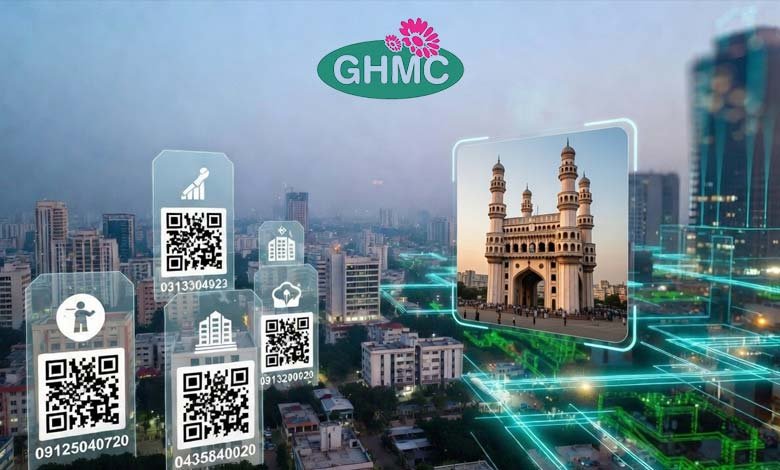
Just like Aadhaar provides a unique identification number to every citizen, the Greater Hyderabad Municipal Corporation (GHMC) is planning to introduce a unique ID number and QR code for every building in the city.
Once implemented, each building will have its own QR code. By scanning the code, people can check whether the building has construction permission, how many floors and flats it has, property tax identification number (PTIN), electricity connection details, trade licence information and other official records.
Building owners will be able to log in to the GHMC website using their unique ID number. They can apply online for property tax assessment, tax corrections and other civic services related to their house or commercial property. Officials say the system will benefit both the government and citizens by bringing more transparency and easy access to information.
3D Digital Map of the City
At present, GHMC has only limited building data based on records submitted by owners or field staff. To improve accuracy, officials have decided to prepare a 3D digital map of the city, similar to Google Street View maps that show building height and structure clearly.
The civic body has already prepared a 2D map of the city through a GIS survey. Now, it plans to create a complete 3D map using advanced technology. The tender process has begun, and a company will soon be selected for the project.
The new system will cover buildings under GHMC as well as those in Cyberabad and Malkajgiri municipal limits. Every building in these three corporations will receive a unique ID and QR code.
Key Figures
- Buildings in old GHMC limits: 23 lakh
- Buildings in merged municipalities and corporations: 7 lakh
- Annual property tax collected from three corporations: ₹2,700 crore
- Estimated buildings not yet under tax coverage: 34 lakh
Officials believe the initiative will help identify buildings that are not currently in the tax system and improve revenue collection while ensuring better urban planning and monitoring.