
Umar Khalid Tells Supreme Court: Calling Peaceful Protest ‘Terrorism’ Is Against Principles of Justice

New Delhi | December 3, 2025 | DeccanLive.com
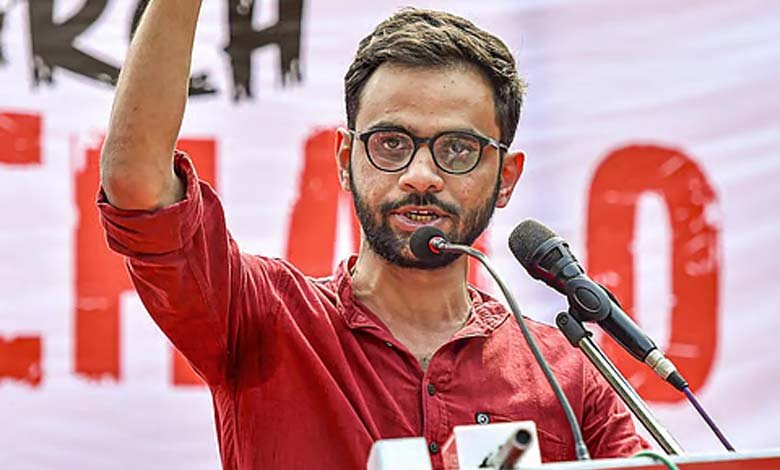
In the ongoing bail hearing related to the 2020 Delhi riots case, activist and former JNU student Umar Khalid told the Supreme Court that calling peaceful protest an act of terrorism goes against the basic principles of justice. His lawyers argued that the charges against him were unfair and intended to silence democratic dissent.
Senior advocate Kapil Sibal, representing Umar Khalid, said that protesting against the CAA is a constitutional right and cannot be treated as a terrorist act under the strict UAPA law. He reminded the court that road block protests, or “chakka jam,” have always been a part of India’s political history — from the movements led by George Fernandes to the Gujjar agitation. “If none of those protests were treated as terrorism, then why are a few students being charged under UAPA today?” he asked.
The Supreme Court also listened to a recording of Umar Khalid’s speech from 17 February 2020 in Amravati, where he clearly said that hatred should be answered with love and violence should be answered with peace. Calling such a speech ‘provocative’ or linking it to a conspiracy, Sibal argued, would set a dangerous precedent for justice in the future.
Other activists charged in the same case — Sharjeel Imam, Gulfisha Fatima, Haider, and Rahman — have also told the court that they are being labelled as “dangerous” and “conspirators” even though none of them has been convicted of any crime so far. Gulfisha Fatima’s lawyer said that keeping people in jail for years without trial violates constitutional values.
It is widely known that lakhs of people across India protested peacefully against the CAA and NRC. “If young people who simply expressed their views are now being called terrorists, it is worrying for our democracy,” the petitioners argued.
Umar Khalid’s lawyers told the court that his only ‘crime’ was speaking up within the limits of the Constitution. Using UAPA to silence disagreement is not justice, they said. They expressed hope that the Supreme Court will correct this wrong and restore the freedom that these young activists deserve.