

Ethiopia Volcano Erupts After 12,000 Years — A Powerful Warning for the World

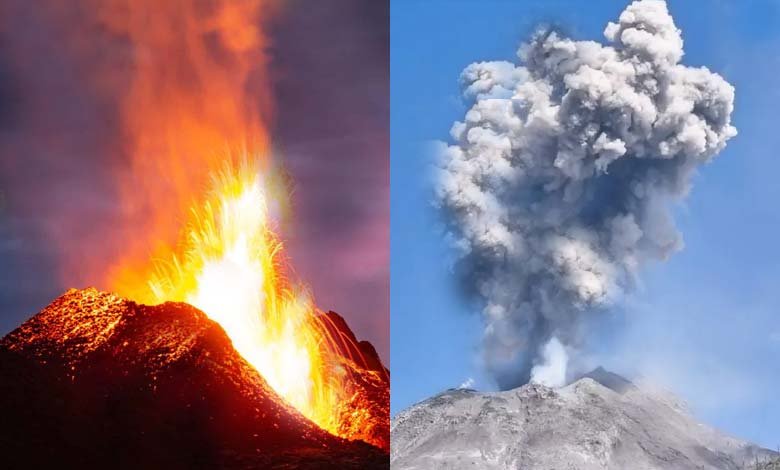
On 23 November, Ethiopia experienced a massive volcanic explosion that shocked scientists around the world. The Hyllig volcano erupted for the first time in nearly 12,000 years, making it one of the rarest geological events recorded in human history.
People living several kilometres away said the blast was so sudden and powerful that it sounded like a bomb explosion. The eruption released a huge ash cloud rising nearly 500 feet into the air—large enough to be visible from space.
Ash Cloud Travels to Middle East and India
Satellite images showed the ash spreading quickly with strong winds.
The cloud first moved over Oman and Yemen, then slowly drifted towards Pakistan and India.
Because flying near volcanic ash is extremely dangerous, many flights in Delhi and other parts of India had to be cancelled. Middle Eastern airports also suspended several flights for safety reasons.
Volcanic ash contains tiny particles of rock, glass, and crystals. These can:
- Damage aircraft engines
- Scratch cockpit windows like razor blades
- Block visibility for pilots
- Cause severe engine failure
For this reason, aviation authorities worldwide avoid operating flights near ash clouds.
Shockwaves Felt 190 km Away
The eruption was so powerful that its sound was heard up to 190 km away. In neighbouring Djibouti, people even felt mild earthquake-like tremors.
In Ethiopia’s Awdera region, located around 28 km from the volcano, several villages were covered with a thick layer of ash. Thankfully, no human lives were lost because the volcano sits in one of the most remote and uninhabited regions on Earth.
The Danakil Depression: One of the Hottest Places on Earth
The eruption occurred in the Danakil Depression, an area famous for its extreme environment:
- It lies below sea level
- Temperatures often reach 50–55°C
- Rainfall is almost zero
- The region is one of the hottest places on Earth
This region attracts scientists and tourists because of its colourful landscapes created by chemical reactions—yellow, green, and blue formations that look like scenes from another planet.
Why Did the Volcano Erupt After Thousands of Years?
The answer lies deep beneath the Earth. The region where the volcano stands is part of a dramatic geological process: Africa is slowly splitting into two continents.
Millions of years ago, all the continents were joined together in a single landmass called Pangaea. Over time, tectonic plates moved and created the continents we know today.
In Ethiopia, three major tectonic plates meet:
- The Nubian Plate
- The Somalian Plate
- The Arabian Plate
These plates are slowly pulling away from each other. This creates the Afar Rift, part of the larger East African Rift System, a 6,000 km long geological zone stretching from the Red Sea through Ethiopia, Kenya, Tanzania, Malawi, and Mozambique.
As the plates move apart—at a rate of 2 to 5 cm per year, similar to the growth of human fingernails—the ground cracks, earthquakes occur, and volcanoes erupt.
Africa Will Split into Two—But Not Soon
Scientists believe that Africa will eventually divide into two separate continents. But this process will take 5 to 10 million years. Even so, the evidence is clearly visible in real time:
- Frequent volcanic eruptions
- Ground cracks
- New lakes forming in rift regions
- Mountain ranges like Kilimanjaro and Kenya
- Active lava lakes like Ethiopia’s Erta Ale
Recent Activity Shows Rising Geological Pressure
The Hyllig eruption is not an isolated event. The region has seen continuous activity:
- In July 2025, the nearby Erta Ale volcano erupted
- The Guguub volcano released thick white smoke the same month
- In 2005, a massive 60 km long crack opened in just 10 days
These events show that the tectonic plates are constantly shifting, making the region one of the most geologically active places in the world.
Conclusion
The sudden eruption of Ethiopia’s Hyllig volcano is a reminder of how dynamic our planet truly is. Although no lives were lost, the ash cloud affected flight operations across Asia and the Middle East. The incident also highlights the ongoing geological transformation beneath East Africa, where the continent is slowly—but surely—splitting into two.
As scientists continue to monitor volcanic and tectonic activity, the Danakil region remains a key location for understanding Earth’s evolution.